


What to Look for in an HRM System in 2026: The Complete Checklist
HR is Entering a New Digital Era
The world of work continues to transform quickly in 2026 as organizations accelerate HR digital transformation in Asia to remain competitive. HR teams now face a unique combination of challenges:
- Workforce models are increasingly hybrid, mobile, and frontline‑heavy
- Labor and compliance rules across Asia—including Mainland China, Hong Kong —are evolving rapidly
- Employees expect consumer‑grade digital experiences from HR
- Businesses want real‑time workforce insights, not monthly spreadsheets
Recent industry studies indicate strong momentum toward HR system upgrades, with research showing that many HR leaders expect to invest in new HCM platforms within the next 12 months, driven by gaps in automation, compliance, and data visibility. This accelerating HR system upgrade cycle reflects the need for more connected and adaptive HR platforms.
In this new environment, future-ready Human Resource Management (HRM) or Human Capital Management (HCM) system become more than tool—they become the foundation of workforce planning, operational accuracy, and employee experience.
What Makes an HRM System “Future-ready” in 2026? (5 Key Trends)
Before diving into the checklist, it’s important to understand the capabilities that define a modern, future ready HRM system in today’s landscape.
Trend 1: Automation and AI-driven HR Processes
HR teams increasingly rely on systems that automate approvals, calculations, and document handling — and now use AI for tasks such as anomaly detection, payroll validation, and candidate screening, reducing manual work especially in regions with complex compliance requirements like Mainland China.
Trend 2: Data Driven Workforce Decisions
Organizations expect real time dashboards, AI predictive insights, and accurate workforce data to support decisions—crucial for managing large retail and frontline teams across regions.
Trend 3: Mobile First Employee Experience
With growing frontline, retail, and service workforces, mobile HR access has become non negotiable. Employees expect to manage leave, attendance, pay slips, and schedules from their devices.
Trend 4: Region Specific Compliance Engines
Global HR systems often lack the localization depth needed for Asia.
Examples include:
- Hong Kong’s new 468 Rule, effective 18 January 2026, which replaces the long standing 418 rule and requires tracking 68 hours across any four consecutive weeks
- China’s complex overtime, shift, and leave compliance rules
- Macau and Taiwan’s region specific holiday and leave structures
These changes require HR systems that can interpret rules without manual calculation.
Trend 5: Integrated Ecosystems
HR no longer operates alone. A modern system integrates with:
- Enterprise & Finance Systems
- ERP systems like SAP, Oracle
- Local payroll and tax systems
- e-Banking
- Workforce & Finance Systems
- Biometric and attendance devices
- Rostering platforms
- POS systems for retail
- Collaboration & Automation
- Collaboration tools
- Office automation (OA) systems
- Business process management (BPM) systems
These trends define what HR should look for in a future ready HRM system—especially one designed to reduce fragmentation and strengthen data integrity through a unified platform.
The 2026 HRM System Checklist (7 Real Needs Mapped)
Below is a practical checklist HR teams can use to evaluate whether their system is ready for 2026 and beyond.
1. Payroll & Compensation
Accuracy is non-negotiable. A modern system should include:
- Automated calculations for salary, allowances, overtime, MPF/CPF
- Multi-currency support for regional operations
- Built‑in statutory forms (e.g., IR56 for Hong Kong)
- Audit trails and approval workflows
👉Why it matters: Payroll errors directly impact employee trust and introduce compliance risks—especially across cross‑border operations. In China specifically, social insurance compliance adds another layer of complexity requiring systemization.
2. Time, Attendance & Leave Management
With distributed and shift‑heavy workforces, T&A accuracy is essential.
Look for:
- Mobile and biometric attendance
- Automated OT, shift, and leave rules for each region
- Real‑time attendance visibility
💡 Hong Kong 468 Rule Consideration:
Systems should automatically track 68 cumulative hours across any rolling four‑week period—not just weekly hours—otherwise HR faces significant compliance risks under the new rule.
👉Why it matters: Manual T&A and payroll processes can cause 2–5% payroll leakage¹, according to KPMG.
3. Employee Data & Workforce Analytics
Modern decisions require accurate workforce data.
Look for:
- Centralized employee database
- Digital contracts, documents, and record management
- Dashboards for turnover, absenteeism, and labor cost trends
- Predictive analytics for workforce planning
👉Why it matters: Companies with strong HR analytics make workforce decisions twice as fast and with lower risk.
4. Recruitment & Onboarding Automation
Recruitment competition across Hong Kong and China continues to intensify.
Look for:
- Automated job posting and resume screening
- Coordinated interview scheduling and digital interviewing
- Digital onboarding with e-signature and training assignment
👉Why it matters: Structured onboarding is proven to significantly reduce early‑stage turnover and accelerate time‑to‑productivity.
5. Performance & Learning Management
Employee development is a priority in 2026.
Look for:
- Goal management & structured appraisals
- Competency-based evaluation frameworks
- Integrated learning modules for upskilling
👉Why it matters: Companies that invest in structured performance + L&D see measurable gains in retention and productivity.
6. Employee Self-Service (ESS) & Mobile HR
Employees expect transparent, mobile‑first HR access.
Look for:
- Mobile app for leave, OT, pay slips, schedules
- Manager dashboards
- Workflow notifications and alerts
👉Why it matters: Research shows HR teams spend nearly 40% of their time on administrative tasks¹, much of which can be shifted to ESS.
7. Scalability & Integration Capability
A future-ready HRM system must grow with the business and adapt across the region.
Look for:
- Cloud‑based scalability
- APIs for ERP (eg: SAP), POS, biometrics, and rostering tools
- Regular updates and localized compliance enhancements
👉Why it matters: Scalable systems prevent “technology lock‑in” and support expansion across regions.
How to Use This Checklist
HR teams can apply this checklist to:
- Identify gaps in existing HR processes
- Build a practical HR digitalization roadmap
- Prioritize modules that reduce manual workload
- Ensure new platforms support compliance across multiple regions
- Evaluate whether current systems can support future expansion
Conclusion
A future‑ready HR system in 2026 is defined by AI automation, analytics, mobile experience, regional compliance strength, and integration intelligence. This checklist supports HR system selection in 2026, helping HR teams evaluate systems objectively and choose future‑ready HRM or HCM platforms that elevate HR from administrative tasks to strategic impact—across Hong Kong, Mainland China, Macau, Taiwan, and beyond.
💡 Explore Tools That Support Your 2026 HRM Checklist
If your organization is evaluating HR platforms for 2026, PI HCM offers a comprehensive suite of HR modules—from payroll and attendance to scheduling, leave, analytics, and cross‑region compliance—designed to support HR teams in Hong Kong, China, and across Asia.
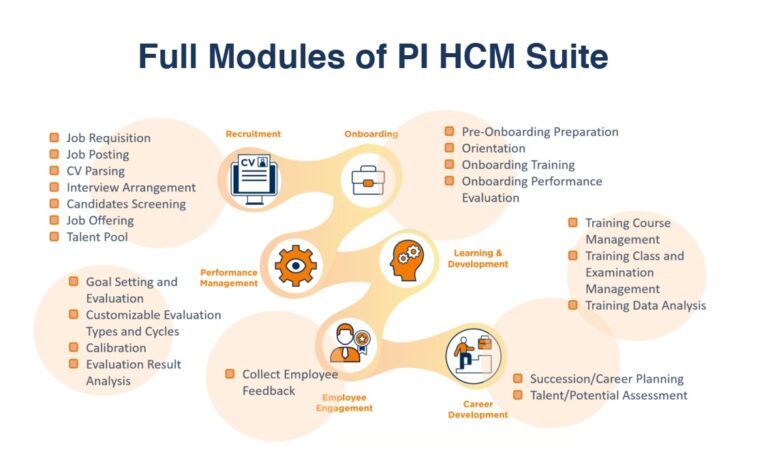
Learn more about the full solution here: https://www.pi-hcm.com/
Reference:
¹ KPMG. Payroll Intelligence for the Agentic Era. (2025)
